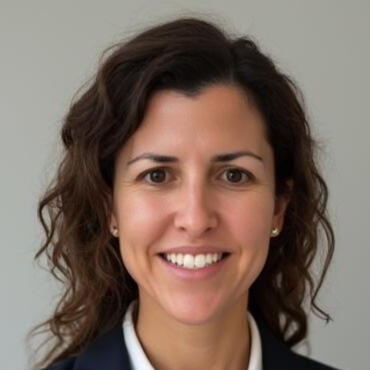
Janelle Metzger
Human Resources Executive · Workforce Strategy · People & Performance · Healthcare
Executive Bio
Janelle Metzger is a Human Resources executive who turns people strategy into business performance. She has led workforce strategy and People and Culture operations for multi-billion-dollar healthcare and insurance organizations, driving a 1 billion dollar lift in operating income, more than 100 million dollars in annualized savings, and significant improvements in retention and access.Janelle is the creator of the RIDE Method, a disciplined approach that helps executives align talent, operating models, and financial results so their organizations can grow with more clarity and less friction. Her work centers on the fundamentals that move organizations forward: improving access, stabilizing teams, strengthening leadership alignment, and building clear structures that enhance execution.She partners with executives who want a more strategic and business-aligned approach to people and performance. Organizations engage her when they want a clearer operating model for HR, stronger alignment between people and financial outcomes, improved workforce stability and productivity, and leadership clarity around what truly drives results.Janelle’s approach reflects a modern view of HR as a core business system. She brings a calm, structured, and outcomes-oriented perspective that helps organizations simplify complexity, lift performance, and scale with confidence.
The Ride Method
Review
Understand what the business truly requires to deliver high-quality care efficiently.Imagine
Create a clear view of the future state and the barriers that must be removed.Design
Focus on workforce and operating model shifts that improve quality, increase revenue, or reduce cost.Execute
Deliver with discipline and connect HR work directly to financial and operational outcomes.
Results
| 1B | 115M | 30% | 50M |
|---|---|---|---|
| Increase in operating income | Annualized savings from workforce redesign | Improvement in retention | Annual risk reduction |
From Chief People Officer to Chief Workforce Officer
March 3, 2026
This article was originally posted on LinkedInArtificial intelligence is moving faster than any prior technology shift than I have seen in my career. What used to take ten years now feels like it is happening in real time.
In a matter of months, generative tools have entered into daily workflows across many industries. In healthcare, we have seen adoption in documentation, analytics, scheduling, revenue cycle, and clinical decision support.
This is not just another technology upgrade - it is changing how the work actually gets done.AI Is Creating New Capacity Levers
Every technology revolution has changed productivity. It is not only adding new tools to how we do work, it is changing how and what does the work.I see three things happening at once.
- Humans are being augmented.
- Processes are being automated.
- And in some cases, digital agents and robotics are stepping into work that used to require manual labor.Put it all together, and the math changes. Capacity is no longer defined solely by headcount. It is defined by how intelligently humans and technology are connected.
In healthcare, where labor is the largest cost driver and access is constrained, this shift is significant.The Work Is Changing Faster Than Our Roles
Most executive structures still assume that workforce strategy equals people strategy: Hire, Retain, Engage, Develop. While those remain critical, they are incomplete.
If work is being performed by a blend of clinicians, administrators, digital agents, automation platforms, and emerging robotics, then the executive responsible for the workforce must think beyond people alone.This is where the Chief People Officer role evolves to Chief Workforce Officer.From People Strategy to Workforce Strategy
The traditional Chief People Officer focused on culture, talent, leadership, and labor. The emerging mandate is broader.
A Chief Workforce Officer focuses on how all forms of labor work collectively. Humans and systems, clinical and digital and present capability and future capacity.That includes
- Understanding how technology changes workflow.
- Ensuring that culture adapts to an AI-enabled reality without eroding trust.
- Redesigning roles and career paths as automation expands.
- Measuring capacity beyond FTE counts.Anticipating how policy and regulation will affect deployment.
This is not about replacing people. It is about designing systems where people and technology together deliver better care, stronger access, and sustainable margins.Why This Matters Now
Healthcare leaders are operating in an environment of margin pressure, workforce fatigue, and uneven access.AI is not simply a tool to experiment with; it is a new performance lever.
Organizations that treat it as an IT initiative will capture incremental gains. Organizations that treat it as a workforce redesign opportunity will reshape their cost base, productivity, and care model.The title may not change immediately, but the scope is already expanding. The question is not whether AI will alter how work gets done; it already is. The bigger question is whether we will evolve with it.
Four Workforce Shifts CEOs Should Be Paying Attention to in 2026
December 19, 2025
This article was originally posted on LinkedInAs healthcare organizations look toward 2026, workforce challenges are no longer cyclical issues leaders expect to resolve and move past. Labor costs, access constraints, leadership fatigue, and execution gaps have become persistent features of the healthcare operating environment. For CEOs, the question is no longer whether workforce issues matter, but whether they are being addressed as tactical problems or treated as part of how the enterprise is designed to operate.Across health systems and payer organizations, a consistent pattern is emerging. Organizations maintaining stability are not necessarily those with the most resources, but those that are deliberate about aligning workforce strategy with operations, financial performance, and care delivery.Four workforce shifts stand out as particularly consequential heading into 2026.1. AI Is Changing How Work Happens Before It Changes Care
Much of the discussion around artificial intelligence in healthcare focuses on clinical innovation. In practice, the earliest and most reliable impact is occurring in how work is organized and executed.AI-enabled tools are increasingly shaping scheduling, documentation, capacity planning, and revenue cycle performance. Organizations seeing meaningful returns are not simply adding technology. They are redesigning roles, workflows, and expectations around it. Where AI is layered onto existing processes without structural change, the impact is far more limited.For CEOs, the implication is straightforward. Technology alone does not create leverage. Operating model decisions do. Workforce design determines whether AI improves productivity and access or adds complexity without measurable return.2. Chronic Disease Management Is Reshaping Demand and Cost
The expansion of GLP-1 therapies reflects a broader shift toward long-term management of chronic disease. As these therapies scale, they are changing how frequently patients interact with the healthcare system, what services are required, and how value accumulates over time.Healthcare marketing executive Sandy Prietto notes that this shift is altering how organizations think about lifetime value and sustained engagement, as care moves away from episodic encounters toward ongoing relationships.For CEOs, the strategic question is not whether these therapies work clinically. It is whether care delivery and workforce models are designed to support continuous engagement rather than one-time visits. Organizations that do not adjust staffing models, care teams, and workflows accordingly risk capturing only a fraction of the clinical and financial value.3. Fragmented Care Models Are Becoming a Performance Liability
Siloed delivery across primary care, behavioral health, dental, and specialty services has long been standard in healthcare. That acceptance is eroding quickly.As pressure increases to improve access and control costs, fragmentation is showing up as missed handoffs, inconsistent patient experience, workforce frustration, and unnecessary expense. In 2026, integration across these domains is expected to accelerate, not because it is theoretically appealing, but because the current model is increasingly difficult to sustain.This is less a clinical challenge than an operating one. Integrated care requires clear roles, aligned incentives, and leadership accountability across functions that have historically operated independently. For CEOs, fragmentation now represents execution risk.4. Consumer Expectations Are Pulling Care Upstream
At-home diagnostics, wearable technology, and greater access to health data are moving care earlier into the consumer journey. Patients are engaging sooner and more frequently, and expectations around access, responsiveness, and clarity continue to rise.Meeting these expectations requires workforce models that support flexibility, digital engagement, and real-time decision-making. Leadership teams must assess whether workforce capacity and skills are aligned to where demand is moving, not where it has historically existed.
Organizations that fail to adjust risk remaining reactive rather than shaping demand and experience proactively.The CEO Imperative for 2026
The defining workforce challenge of 2026 will not be staffing shortages alone. It will be whether leadership teams treat workforce strategy as a core element of enterprise design.Workforce decisions increasingly shape access, margin, leadership capacity, and execution speed. CEOs who integrate workforce considerations into operating models, financial planning, and technology investments will be better positioned to navigate continued volatility.The next phase of healthcare will reward clarity and alignment over incremental fixes. Workforce strategy is no longer a support function. It is a business decision.
let's connect
If you are leading a healthcare organization and want a more strategic and business-aligned approach to people and performance, you can reach me here:
310-773-4773
[email protected]